

Liquid Cooling
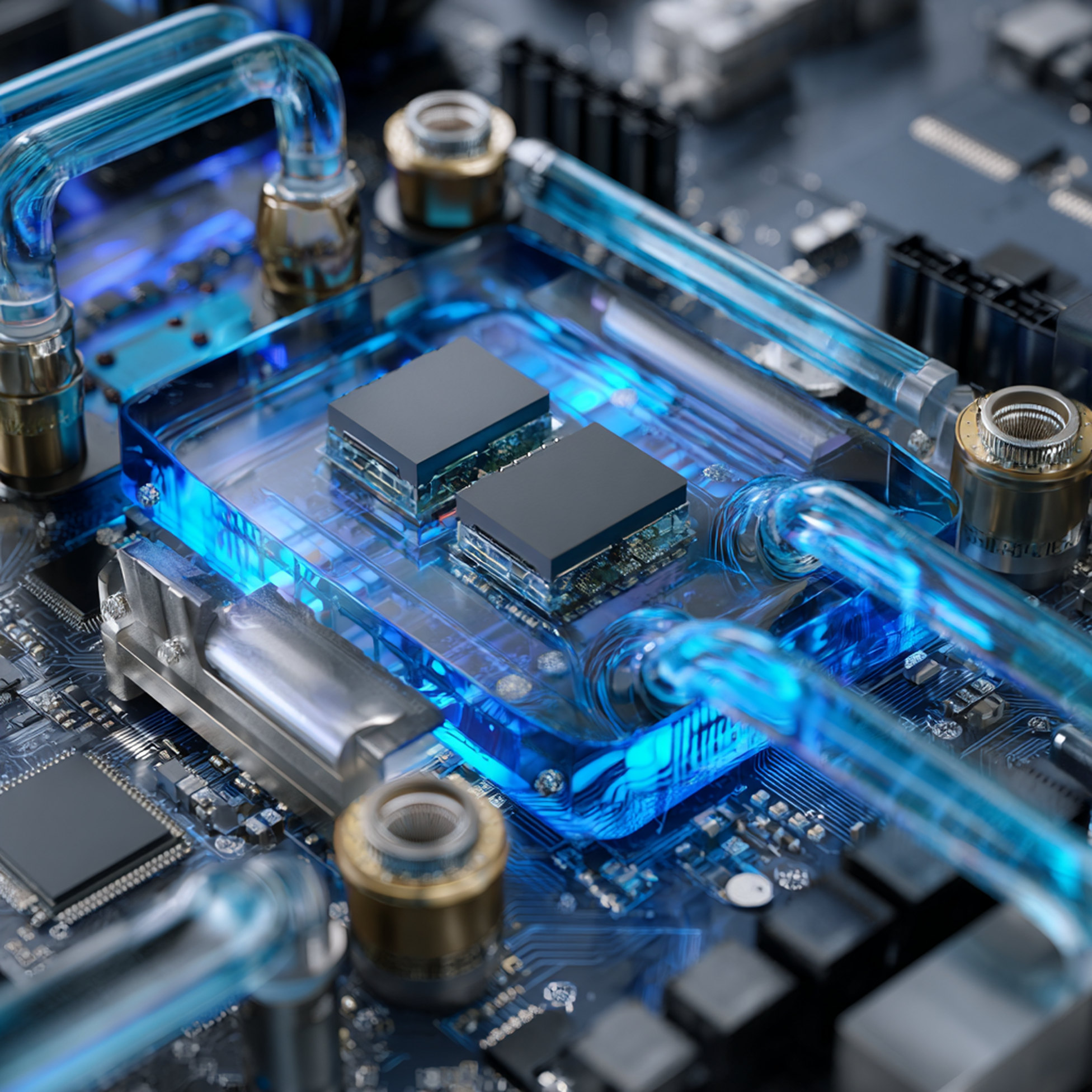
In today's data-driven world, high-performance computing, AI, and other demanding applications are pushing data centers to their limits, resulting in significant heat generation. Traditional air cooling methods are struggling to keep up with the growing energy demands and heat output. Liquid cooling solutions are emerging as a transformative approach to efficiently manage heat dissipation and optimize performance in data centers.
Liquid cooling provides superior thermal management by directly absorbing and transferring heat from high-density components like CPUs, GPUs, and memory modules, resulting in lower energy consumption, reduced cooling costs, and increased computing density. This technology is particularly effective for next-generation data centers that support AI, HPC, and cloud applications, where performance and sustainability are crucial.
As data centers continue to evolve, liquid cooling solutions offer a forward-thinking approach to addressing the challenges of energy efficiency, thermal regulation, and high-performance computing in a more sustainable and cost-effective manner.
Cooling Technology
Amidst growing server installations, datacenter sustainability gains importance. Power Usage Effectiveness (PUE) emerges as a vital metric, gauging datacenters' energy efficiency by comparing total energy consumption to that delivered to computing equipment. To lower PUE, datacenters explore various cooling technologies, each with unique advantages and disadvantages.
Comparison of Different Cooling Technologies
| Maturity | Relative Cost | Pros | Cons | |
|---|---|---|---|---|
| Air Cooling |
|
|
||
| Liquid-Assisted Air Cooling |
|
|
||
| Self-Contained Liquid Cooling |
|
|
||
| Single-Phase Immersion Cooling |
|
|
||
| Two-Phase Immersion Cooling |
|
|
MiTAC Liquid Cooling Solutions
Enter Liquid Cooling, the game-changing technology reshaping data center efficiency. With its Warm Liquid Cooling approach, it effectively removes heat from components (CPU/ GPU/ DIMM) while consuming less power. By eliminating cooling fans, it unlocks higher computing performance and better airflow, leading to remarkable gains in efficiency.
Beyond performance enhancements, Liquid Cooling significantly reduces data centers' carbon footprint, paving the way for a more sustainable future. This eco-conscious technology aligns perfectly with the global shift towards greener practices.
MiTAC has been at the forefront of integrating liquid cooling technologies into data center solutions. Since the 2018 platform, we have incorporated self-contained liquid cooling solutions into our Intel DSG (Datacenter Solutions Group) products. Over three successive generations, we have successfully implemented these advanced cooling technologies, offering our customers a complete solution that spans from L10 to L11 rack integration based on their specific needs.
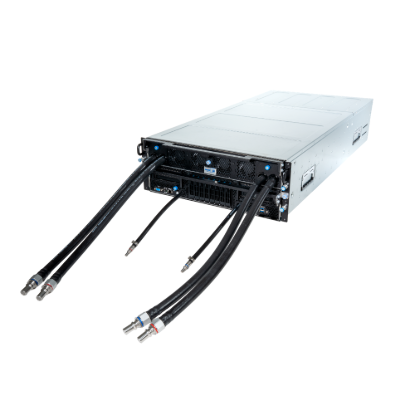
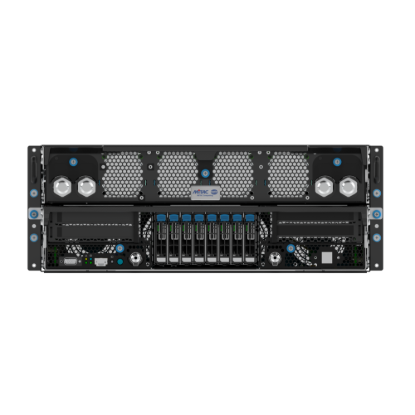
The MiTAC G4826Z5 server platform is purpose-built to accelerate next-generation high-performance computing (HPC) and generative AI workloads. Powered by AMD EPYC™ 9575 / 9755F processors and high-performance AMD Instinct™ MI355X accelerators, this system integration delivers unparalleled compute density and massive memory bandwidth. To unleash maximum hardware potential, the G4826Z5 features an advanced direct liquid cooling (DLC) architecture. This thermal design efficiently manages the high-TDP components within a dense form factor, significantly improving data center energy efficiency while guaranteeing sustained, optimal performance for the most demanding foundational models.
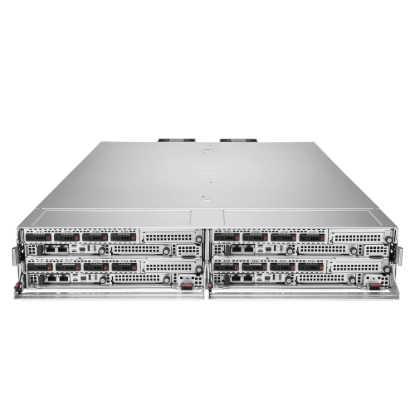
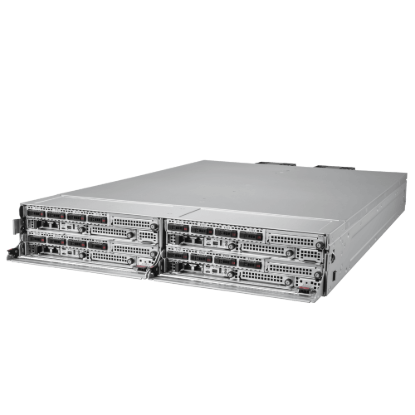
MiTAC concurrently offers the C2811Z5 liquid-cooled multi-node server, integrated into an OCP-compliant, high-density rack infrastructure. Powered by AMD EPYC™ 9005 Series processors, each node supports 12 DDR5-6400 memory slots alongside high-speed NVMe E1.S storage interfaces. This highly energy-efficient architecture is purpose-built to accelerate compute-intensive workloads, including scientific research, engineering simulations, and climate modeling.
Related Products

最新情報を受け取る
業界のインサイト、最新ニュース、イベントのハイライトをお届けします。